
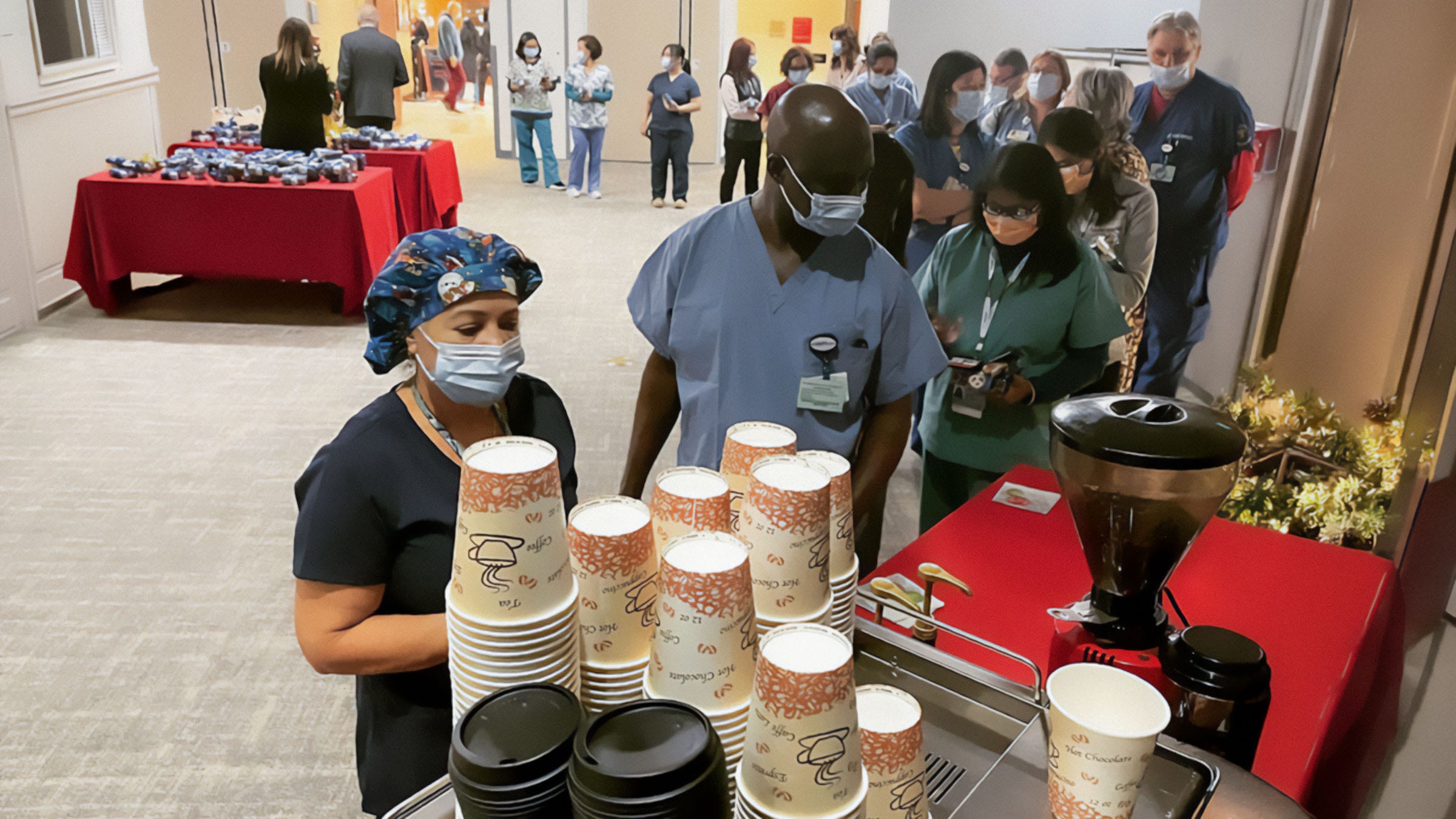
Coffee catering for a corporate campus requires more than placing a coffee station near the entrance. The setup must fit the employee schedule, workplace layout, security requirements, and the periods when demand will be highest.
A morning arrival program operates differently from an employee appreciation afternoon. A scheduled conference break creates a different service pattern than several hours of open service. Workplaces with multiple buildings, departments, or shifts may need more than one station or separate service windows.
Based in Cherry Hill, Coffee Malem provides mobile coffee catering for corporate campuses, offices, business parks, and employee events throughout New Jersey. Each setup is planned around the workplace layout, where employees will gather, and when they will be available.
Design for the Busiest Part of the Schedule
The total employee count does not reveal how quickly people will need to be served.
A headquarters may have several hundred employees on site, but demand can vary sharply throughout the day. Morning arrivals, scheduled training breaks, department meetings, and shift changes each create different service peaks.
The service should account for:
- Employee arrival times
- Scheduled or flexible breaks
- Shift changes
- Meetings and presentations
- The length of each service window
- The number of people likely to approach at once
For a morning program, the busiest period often occurs just before the workday begins. During a conference or training day, it may be the first scheduled break. At an employee appreciation event, demand can remain steadier over a longer period.
These patterns affect the number of stations, staffing level, and menu scope.
A focused menu supports faster service during a short conference break or shift change. A longer service window allows for greater variety when employees approach more gradually.
For more on matching drink selection to service timing and demand, see our guide to planning a coffee catering menu.
Match Station Placement to the Workplace Layout
The most useful coffee station is one employees can reach without disrupting the natural flow of the workplace or event.
A suburban corporate campus may have room for several well-spaced service points, while an office building in a denser New Jersey business district can require tighter coordination around loading, elevators, common areas, and employee circulation.
Possible service areas include:
- Main entrances and reception areas
- Employee gathering spaces
- Conference and training rooms
- Cafeterias and shared common areas
- Outdoor courtyards or event lawns
- Separate buildings, floors, or departments
The goal is not always to create one large central line. Several well-positioned stations reduce walking distances, distribute demand more evenly, and make the service easier to reach for employees who cannot leave their work areas for long.
A single Coffee Malem cart typically serves 65 to 80 guests per hour. When a program requires more capacity or broader coverage, Coffee Malem can coordinate additional carts and baristas across one or more service locations. The appropriate setup depends on the menu, workplace layout, length of the service window, and expected demand during the busiest interval.
Carts are generally the most flexible format for office interiors, lobbies, upper floors, and conference areas. The coffee truck can suit an outdoor appreciation day or campus gathering when the property provides safe, level vehicle access and an operating area that remains available for the full service window.
For a detailed comparison of the two formats, see Coffee Cart or Coffee Truck? Choosing the Right Setup for Your Event.
How the Workplace Setting Changes the Setup in New Jersey
New Jersey workplaces range from suburban office campuses and business parks to denser office buildings, healthcare facilities, institutional campuses, and multi-tenant properties. The service plan changes with the type of site.
At a suburban campus, there is often more flexibility for outdoor service, multiple carts, or a coffee truck, but employees can also be spread across several buildings or departments.
In a denser office setting, loading access, freight elevators, common-area rules, and available line space have a greater influence on where service can operate.
Healthcare organizations and other large institutional workplaces often require planning around multiple shifts, controlled-access areas, or employees who cannot leave their departments at the same time.
Coffee Malem has experience serving employees in healthcare settings, including a 2021 service at Saint Peter’s University Hospital in New Brunswick.
Multi-tenant buildings add another layer of coordination. Property management may need to approve loading, common-area placement, setup times, or the use of shared spaces before the event.
These differences explain why the same guest count can lead to very different service plans from one New Jersey workplace to another.
Coordinate With Security and Facilities
Corporate events often require early coordination with building security, facilities, property management, or operations.
Relevant questions include:
- Does the building require vendor registration or identification?
- Where should the team enter and unload?
- Is a loading dock appointment required?
- Will equipment need to use a freight elevator?
- How far is the service area from the unloading point?
- Are there restrictions on vehicle movement or outdoor placement?
- When can setup begin?
- Who will provide access before normal office hours?
These details affect arrival time, equipment movement, and setup.
If the building requires proof of insurance, Coffee Malem can provide a Certificate of Insurance and name the venue, client, or other required party as an additional insured when requested.
At managed office buildings and multi-tenant properties, the available unloading window can be narrower than the event schedule itself. At larger campuses, the greater challenge may be moving equipment between buildings or reaching the intended employee area efficiently.
For outdoor truck service, temporary loading access is not enough. The vehicle needs a designated operating area where it can remain for the full service window.
Early coordination is particularly important for secure offices, managed corporate campuses, high-rise buildings, healthcare facilities, and properties shared by several companies.
Account for Multiple Shifts and Staggered Schedules
Many New Jersey workplaces operate on more than one schedule.
Production facilities, distribution sites, healthcare organizations, and other large employers may operate across multiple shifts. Conventional offices can also have staggered attendance, hybrid schedules, or departments that cannot take breaks at the same time.
The service plan should account for which groups are being served and when they can leave their work areas.
Depending on the schedule, this can involve:
- Separate morning and afternoon service windows
- Multiple carts operating simultaneously
- Separate service windows in different employee areas
- Service around shift changes
- A longer service period with steadier demand
A setup designed for one concentrated office break will not necessarily work for a site where employees become available in stages. Timing should follow the way the workforce is actually scheduled.
Planning Repeat Workplace Events
When a workplace hosts coffee service more than once, earlier events can inform future planning.
Coffee Malem can review when demand peaked, whether the station placement worked as intended, and whether the staffing and menu matched the available service time.
A monthly office gathering, quarterly employee program, training series, or recurring tenant event does not need to follow exactly the same approach each time. Timing, location, station count, and menu can be adjusted as attendance, season, or workplace needs change.
Over time, the service can become more efficient and better aligned with employee use.
What to Include in Your Inquiry
You do not need to have the full event plan completed before contacting Coffee Malem.
A useful initial inquiry should include:
- The event date and New Jersey location
- The type of workplace and the areas involved
- The approximate employee or guest count
- The intended service time and any shift schedule
- Whether service will take place indoors or outdoors
- Known security, loading, or access requirements
- The purpose of the event
Coffee Malem can then recommend the setup, number of stations, staffing level, and menu scope.
Three to four weeks of lead time is ideal, particularly for larger campuses, multi-station setups, or events that require coordination with facilities and security. Shorter-notice requests may still be possible depending on availability, location, and scope.
Corporate Coffee Catering Across New Jersey
Successful workplace coffee service depends on where employees will be, when they are available, and how quickly they need to be served.
Across New Jersey, those practical requirements differ between suburban business campuses, managed office buildings, healthcare facilities, institutional workplaces, and multi-tenant properties. Coffee Malem plans service around those site conditions as well as the workplace schedule and expected demand.
Planning an employee event or corporate campus program in New Jersey? Talk through the location, schedule, attendance, and site requirements with Coffee Malem. The team will recommend a service plan built around the way your workplace functions.