Once coffee service is part of the event plan, the drink list can expand quickly.
There are familiar espresso drinks, specialty lattes, hot and iced options, matcha, tea, refreshers, mocktails, and the possibility of creating something specifically for the occasion.
The useful question is not how many choices can fit on the menu. It is which ones make sense for the people attending and the way service will operate.
A permanent café can carry a broad menu because customers arrive throughout the day. At an event, many guests may order within the same short period. At another, people may approach gradually for several hours.
That difference should shape the selection from the start.
For the broader service itself, see Event Coffee Catering.
Start With Drinks Guests Already Know
Familiar café drinks give guests an easy starting point.
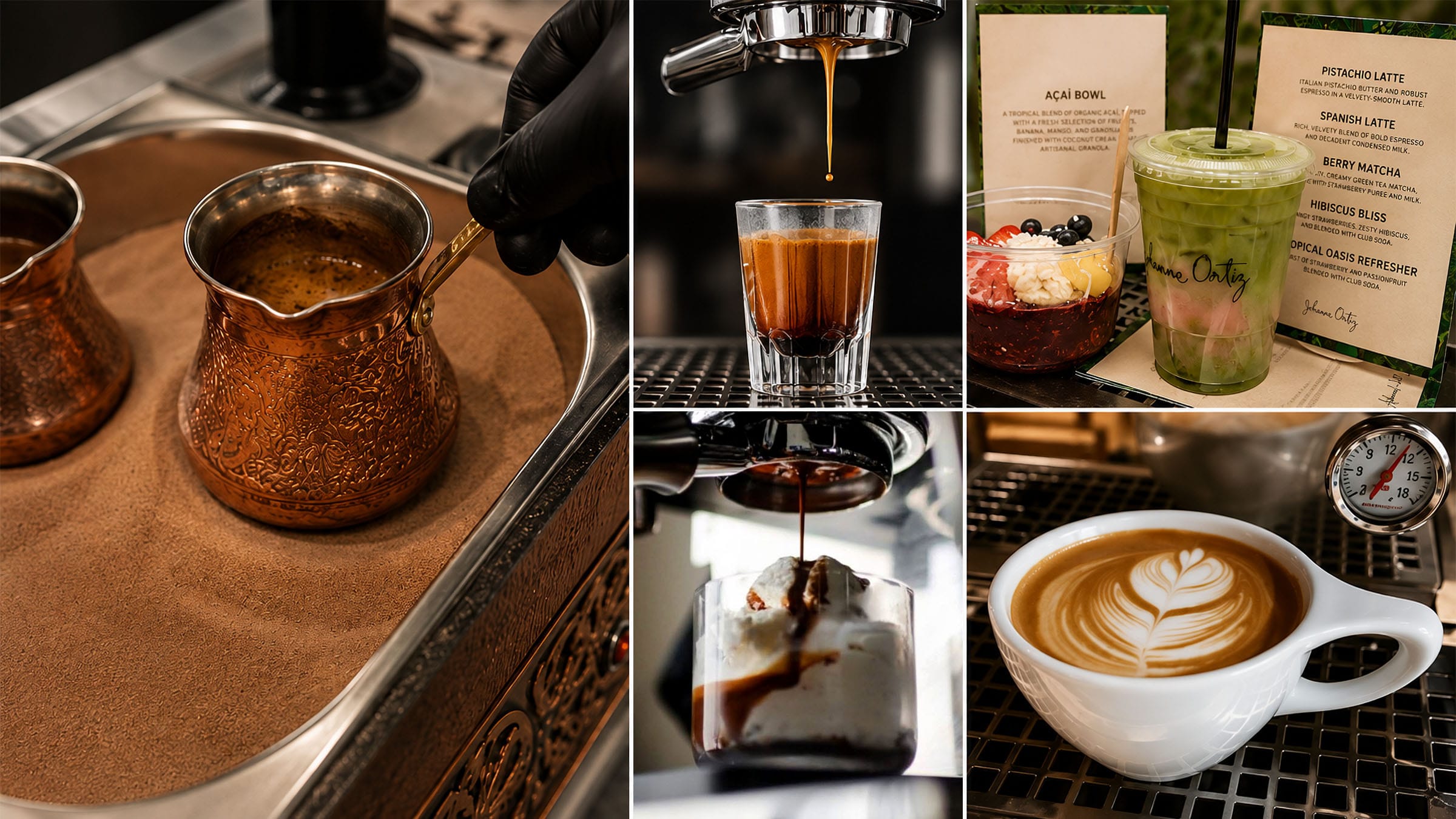
Coffee Malem’s documented menus have included espresso, Americano, latte, cappuccino, cortado, flat white, mocha, and other coffee drinks.
Not all of them need to appear at every event.
During a short service window, a smaller selection can make ordering easier. When guests approach more gradually, there may be room for greater variety.
Familiar drinks also give specialty options something to sit alongside. Someone who does not want to consider a signature latte or event-specific creation can order something recognizable without having to study the menu first.
Include More Than Coffee
An event coffee bar can also serve guests who want something other than an espresso-based drink.
Coffee Malem’s event offering can include tea, chocolate drinks, refreshers, matcha, and mocktails alongside coffee. The exact combination is planned around the event rather than treated as one fixed menu.
Audience and timing both matter.
A morning corporate program may lean heavily toward coffee and familiar café drinks. An afternoon event may generate more interest in iced drinks, matcha, or refreshers. A wedding or private celebration may call for a wider mix because guests are staying longer and choosing drinks at different points in the event.
Mocktails extend those options further. Coffee Malem has also provided dedicated mocktail-bar service for weddings, while mocktails can be incorporated into other event menus when the format calls for them.
The selection does not need to cover every possible preference. It needs enough range for coffee drinkers and non-coffee drinkers to both find worthwhile choices.
Decide Which Drinks Need to Be Hot or Iced
Offering hot and cold drinks does not require duplicating the entire menu.
Season and setting provide an obvious starting point. An outdoor summer event will usually call for a different balance than a winter morning program. Time of day, service length, and venue conditions also influence what guests are likely to order.
Cold drinks affect the working setup as well. Ice, ingredients, storage, and preparation all need to fit within the available service area.
Instead of making every latte, matcha, or specialty drink available both ways, identify the hot and cold choices most useful for that event.
Coffee Malem supports hot and cold service, with the final selection determined as part of the agreed menu.
Give Specialty Drinks a Clear Role
Specialty drinks can make an event menu more distinctive without taking it over.
Coffee Malem’s documented menus and proposals include flavored lattes, specialty espresso drinks, matcha variations, refreshers, and other event-specific beverages. Individual selections have changed across events and menu versions, so they are better viewed as examples of the range rather than a permanent list.
At an event, a specialty drink might reflect the season, offer a flavor guests would not normally order, or connect more directly to the occasion.
A few distinctive choices are often easier to notice than a long list of them.
Preparation matters too. A drink involving additional ingredients or steps may work comfortably when orders arrive gradually. The same drink deserves more consideration when many guests will order within a short period.
Use Signature Drinks When the Event Gives Them Meaning
A signature drink goes beyond adding another specialty flavor. It connects the beverage directly to the event.
Coffee Malem wedding proposals have included examples such as I Do a Latte and My Lovecino. Brand-specific menu concepts have also used drink names and recipes connected to products, collections, and campaign themes.
That approach works best when the menu is meant to become part of the experience.
At a wedding, one personalized drink may be enough while the rest of the selection remains familiar. At a product launch, the idea might extend to the drink name, menu design, cup presentation, and flavor.
An employee event or straightforward corporate gathering may need none of that. Familiar names can make more sense when guests need to order quickly.
For examples of how coffee menus can become part of a wider campaign, see Coffee Catering for Brand Activations and Product Launches in New York City.
More Choices Change What Happens Behind the Bar
Adding a drink affects more than what appears on the printed menu.
It can introduce another ingredient, preparation step, garnish, storage requirement, or item that needs to be replenished during service. Guests also need time to read the choices and decide what to order.
Those effects are small when demand is gradual. They become more important when many orders arrive close together.
Menu size and service pace therefore need to be considered together.
A focused selection can still include distinctive drinks. It simply means choosing options that can be prepared consistently alongside everything else on the bar.
This matters most during short breaks, scheduled arrivals, and other periods when ordering becomes concentrated.
Guest flow, peak demand, and the number of service points can affect the menu as well. Those broader setup decisions are covered in Coffee Cart or Coffee Truck? Choosing the Right Setup for Your Event.
Account for Dietary and Religious Requirements Early
Some events have requirements that go beyond drink preference.
Coffee Malem can accommodate events with kosher requirements, with certification available where applicable. Other dietary, cultural, or religious considerations may also affect ingredients, menu choices, or the timing and organization of service.
If those requirements apply to your event, raise them while the menu is being planned rather than after the drink selection has been finalized.
The details should be reviewed for the individual event. Ingredients, preparation methods, products, and service requirements can vary, so assumptions should not be made from a drink name alone.
Discussing these considerations early gives Coffee Malem time to review what is needed before the menu is confirmed.
Match the Menu to the Event
Different events call for different priorities.
Corporate and Employee Events
At a workplace event, familiar drinks and straightforward ordering may matter most, particularly during arrivals, scheduled breaks, training sessions, or shift changes.
There is still room for matcha, tea, refreshers, or a specialty drink when they suit the audience. The selection simply needs to work within the time employees actually have available.
For a closer look at workplace planning, see Coffee Catering for Corporate Campuses and Employee Events in New Jersey.
Weddings and Private Celebrations
Weddings and private events often leave more room for personalization.
A couple may want a signature latte, personalized drink names, refreshers, mocktails, or a broader combination of coffee and non-coffee choices.
Timing matters here too. Coffee served during one part of the celebration may call for a different selection from service taking place later in the day.
Coffee Malem has separate guidance for Wedding Coffee Catering and Private Events.
Brand Activations and Product Launches
At an activation, the drinks can become part of the creative concept.
A beverage might reference a product, collection, campaign, ingredient, or visual direction. Custom names and menu presentation can reinforce that connection when they contribute something useful to the activation.
The creative idea still has to work operationally. A campaign-specific drink needs to be practical at the volume and pace expected during the event.
Longer Service Windows
An event running for several hours puts different demands on the selection.
Ingredients need to stay stocked, cold items need adequate supply, and drinks should be prepared with the same consistency later in the service window as they were at the beginning.
A menu suited to a short reception may therefore need adjustment for an all-day program.
Retail events are a good example because the service may need to remain organized and visually consistent through a long day while operating around an active selling environment. For more on that planning, see Planning Coffee Service for Fashion and Luxury Retail Events in NYC.
Customization Can Be Simple or Extensive
A custom menu does not have to begin with inventing a new drink.
It may simply mean selecting the coffee and non-coffee choices that best fit the audience. Another event might add one signature beverage or a few event-specific names.
More developed projects can involve custom menu presentation, branded cups, event-specific drinks, or other guest-facing elements.
Coffee Malem also offers optional enhancements such as Turkish coffee prepared on hot sand and latte-art printing with approved artwork. These can add something distinctive when they suit the event, but they do not need to become part of every service.
The level of customization should follow the role the beverage service is expected to play.
Settle Produced Elements Earlier
Basic drink choices and produced menu elements do not always follow the same timeline.
A custom beverage may require additional ingredients or testing. Event-specific drink names may need approval. Branded menu graphics, custom cups, or latte-art artwork introduce production steps that cannot necessarily be changed immediately before the event.
If those elements matter to the event, they should be discussed early enough to confirm what is practical and complete any required approvals or production.
A straightforward menu may sometimes be finalized with less notice. Customized elements generally benefit from more lead time.
What to Share When Planning the Menu
You do not need to contact Coffee Malem with a finished drink list.
Useful starting information includes:
- the type of event and approximate guest count
- the service window and time of day
- whether the event is indoors or outdoors
- any preference for hot, cold, or mixed service
- drinks you already know you want included
- interest in matcha, tea, refreshers, mocktails, or other non-coffee options
- any signature drink, wedding, theme, or brand idea
- special ingredients or presentation ideas being considered
- dietary, allergen, kosher, or other cultural and religious requirements that need to be reviewed
From there, Coffee Malem can shape the agreed selection around the audience, service window, event format, and practical requirements.
Build the Menu Around the Event
An event coffee menu does not need to reproduce everything available at a permanent café.
It needs familiar choices that guests can order easily, worthwhile alternatives for people who want something different, and specialty or custom drinks where they contribute to the occasion.
For one event, that may mean a focused espresso menu with matcha and a signature latte. Another may call for coffee, tea, refreshers, and mocktails. At a brand activation, the menu itself may become part of the campaign.
The selection should fit the people attending and remain practical from the first order to the last.
Planning coffee catering for an event? Share the event, guest count, service window, and any drink ideas already taking shape, and talk through the menu with Coffee Malem.