Coffee catering can play very different roles in a brand activation.
For one event, it may simply provide hospitality for clients, media, or invited guests. For another, a custom drink becomes part of the product story. At a larger launch, the challenge may be more practical: serving a concentrated rush of guests without letting the coffee line interfere with the rest of the event.
For experiential agencies, brand teams, PR firms, and producers working across New York City, planning starts with a simple question: what does the coffee bar need to do?
Coffee Malem has approached that question across product launches, luxury retail activations, influencer events, outdoor pop-ups, and recurring brand programs in New York. Sometimes the answer is restrained branded service. In other cases, the coffee setup becomes part of the campaign itself.
From Event Objective to Working Menu
Once the role of the coffee bar is clear, the menu, presentation, and service plan can take shape around it.
The useful starting information is usually already in the production brief: venue, audience, estimated attendance, service hours, likely peak periods, campaign concept, approved artwork, brand guidelines, photography requirements, product placement, and the desired level of customization.
Any guest-facing expectations should be included too. If baristas will use campaign language, introduce a product, or refer to drinks by branded names, those details belong in the brief.
Sometimes a focused menu, clean cart, and custom cups are enough. Other activations call for a drink developed around a product, collection, season, or campaign theme.
For an Away product launch involving Amazon and Nordstrom, Coffee Malem incorporated coffee service into a pop-up airport-lounge concept. VIPs and influencers moved through the activation with Away luggage while coffee flights were served from a custom bar. The coffee was part of the larger idea rather than a separate catering station.
Not every available surface needs a logo.
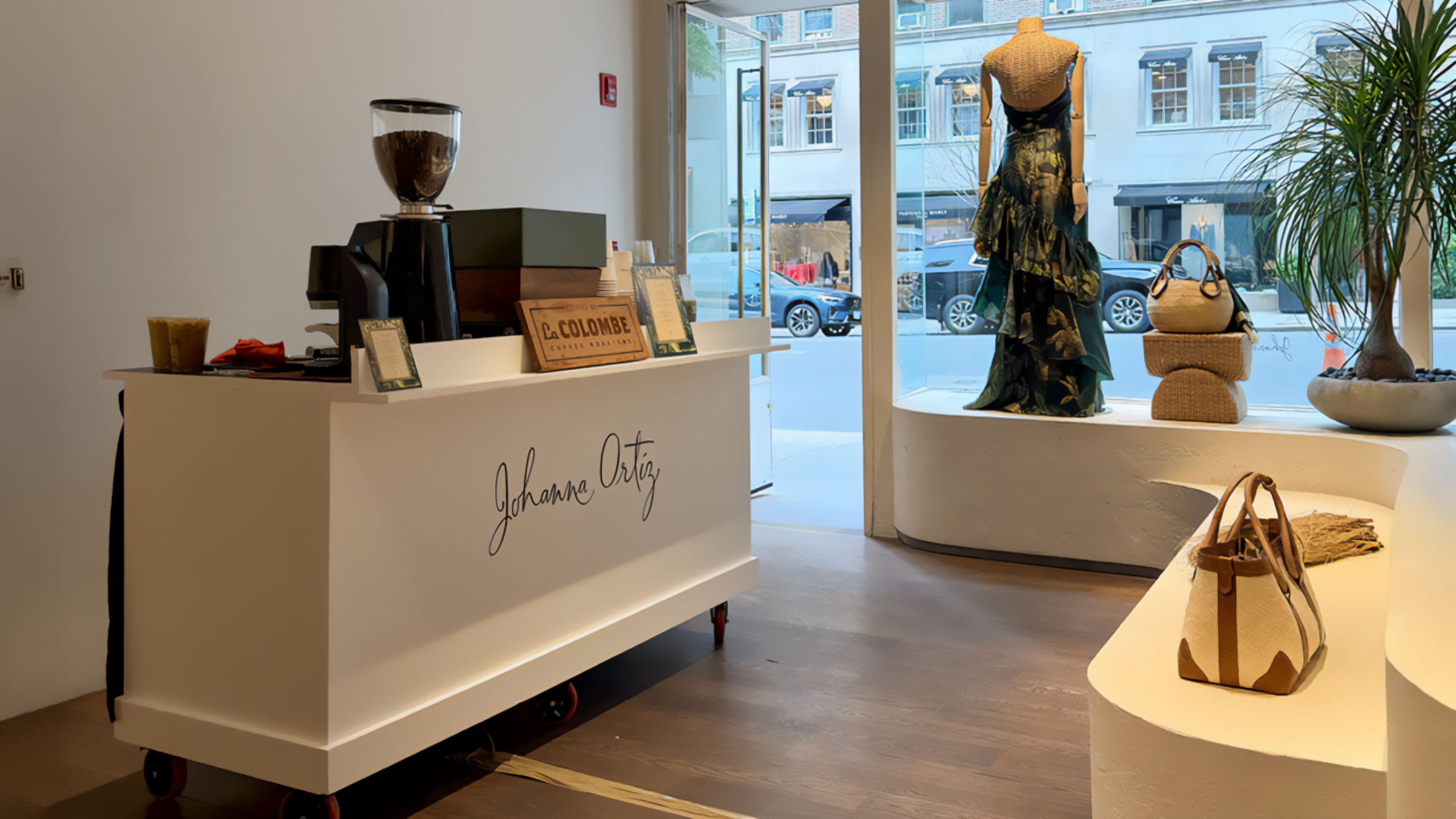
A branded menu still has to function behind the bar. Campaign-specific drink names, custom flavors, branded cups, menu graphics, cart treatments, and latte-art printing with approved artwork can all become part of the presentation. For the right concept, something more distinctive, such as Turkish coffee prepared on hot sand, may fit as well.
The visual treatment can go further when the campaign calls for it. For a Sam Edelman spring magazine launch, Coffee Malem transformed the cart into a Central Park-themed installation inside the storefront, using a full vinyl wrap with park imagery and matching custom cups. The station was designed to reinforce the environment of the launch, not simply carry a logo.
Menu size matters. Five or six specialty drinks may work comfortably at a smaller press event with staggered arrivals. The same menu can become cumbersome when hundreds of people leave a presentation at once.
Customization also affects production. A drink with extra preparation takes longer to make, while printed cups, cart graphics, and fabricated elements introduce artwork and production deadlines.
For a broader look at balancing drink variety, service pace, guest preferences, and customization, see How to Plan a Coffee Catering Menu for Your Event.
When speed matters most, the menu should be built for it. When photography and individual interaction matter more, the service can allow additional time per drink.
Establish a Clear Creative Handoff
Brand activations often involve several approval layers. An experiential agency may oversee production, the brand controls visual identity, PR handles media, and the venue has its own operating requirements.
Before branded elements move into production, final approval needs to sit with a clearly identified person or team.
Venue coordination should begin with the initial brief rather than waiting until the creative work is finished. A customized activation will typically move through a sequence like this:
- Initial brief
Confirm the event format, venue, attendance, schedule, campaign concept, and intended role of the coffee bar. - Setup recommendation
Review the venue and expected demand to determine the cart, truck, staffing, and station requirements. - Menu and presentation
Define the drinks, naming, cups, signage, cart treatment, and other branded elements. - Artwork approval
Finalize logos, graphics, names, and other assets before printing or fabrication begins. - Branded production
Produce the approved elements while the coffee team completes the operational plan. - Final venue confirmation
Confirm access, placement, power, loading, service timing, and event-day contacts.
Late creative changes can affect both timing and cost.
Plan Photography Before the Room Is Full
For product launches, press previews, and influencer events, the coffee station may be photographed before guests arrive as well as during service.
That changes how the station should be positioned and prepared.
A shot list might call for a clean image of the full setup, a cup beside the featured product, a logo facing a particular camera position, or a drink handoff involving talent or an influencer.
The background deserves the same attention. If a campaign wall, retail display, or product installation needs to appear in the frame, storage, cables, packaging, and working equipment should stay outside the shot.
If photographers need uninterrupted access before guests enter, include that time in the load-in schedule.
Where photography or social posting is restricted, establish in advance whether vendors may photograph or share the setup.
A photo-ready station is not simply one that looks good. It is one arranged for the images the production team actually needs.
Press and Influencer Events Create Short Demand Spikes
Guest count alone does not tell you how busy the coffee bar will be.
A 100-person media event can create heavier short-term demand than a much larger gathering if nearly everyone approaches the station immediately after the same presentation.
The more useful questions are about timing. When do guests arrive? When does the bar open? Is coffee available before or after the main program? Will guests return for another drink? Does the room empty into the same service area all at once?
Those answers help determine whether one station is sufficient or whether demand should be spread across several service points.
Plan for Peak Demand, Not Total Attendance
A single Coffee Malem coffee cart typically serves 65 to 80 guests per hour. Actual pace varies with the menu, venue, ordering pattern, and event conditions.
For larger programs, Coffee Malem can coordinate additional carts and baristas across one or more service points. The right setup depends on total attendance, peak demand, menu complexity, the length of the service window, and whether guests are concentrated in one area or spread across the venue.
The busiest interval matters more than total attendance. A large activation with guests arriving gradually throughout the day presents a different service problem from one where everyone approaches during the same short break.
A useful estimate considers:
guest count + peak demand + menu complexity + available service time + venue layout
Choose the Setup Around the Venue and Guest Flow
Coffee carts are generally the more flexible option for New York City interiors, including retail spaces, showrooms, offices, conference venues, galleries, building lobbies, and private event spaces.
The Coffee Truck becomes an option when the venue provides suitable vehicle access, operating space, and positioning. Where vehicle access is restricted, or where coffee service needs to sit inside the event environment, carts are usually the better fit.
At larger activations, several stations may work better than one central queue. Multiple carts can divide demand between rooms, floors, entrances, or program areas while increasing overall capacity.
Placement matters just as much as quantity. A coffee line should not block a product display, registration area, entrance, photography position, or another part of the activation.
For a more detailed comparison, see Coffee Cart or Coffee Truck? Choosing the Right Setup for Your Event.
Account for New York City Venue Logistics Early
In New York City, the physical setup can require as much coordination as the menu.
A brand activation in SoHo may present a completely different load-in from one in Midtown, Chelsea, Flatiron, Hudson Yards, Tribeca, or the Financial District. Building procedures, access windows, and available working space vary from venue to venue.
Before event day, confirm:
- Loading dock schedules
- Freight elevator reservations
- Building access windows
- Certificates of insurance
- Security check-in
- Vendor lists
- Approved load-in routes
- Available electrical service
- Equipment placement restrictions
- Exclusive catering or food-and-beverage restrictions
- Setup and breakdown windows
- Floor protection or other building requirements
Coffee Malem can provide a Certificate of Insurance and name the venue, client, or other required party as an additional insured when requested.
None of these requirements is unusual. Discovering one during load-in, however, can create a problem that could have been resolved earlier in planning.
Street, sidewalk, or other public-space activations may involve additional permits or approvals outside Coffee Malem’s own planning schedule.
For a fully customized activation, three to four weeks is a useful planning target, particularly when branded elements need to be printed or fabricated. More straightforward coffee catering can sometimes be arranged with less notice, depending on availability and scope.
Complex programs may need more time, especially when several locations, fabricated branding, restricted access, or outside approvals are involved.
Production deadlines belong on the event schedule. If cup artwork or cart graphics must be approved by a certain date, that deadline matters just as much as the freight-elevator reservation or final guest count.
Multi-Day and Multi-Location Activations
Some campaigns extend across several days or venues: multiple launch dates, several retail locations, a showroom running through the week, or related activations around the city.
Coffee Malem’s work includes both recurring retail programs and consecutive-day activations. Examples include recurring custom-cart work for John Lobb on Madison Avenue and a two-day MAC influencer event during New York Fashion Week.
A longer example is Coffee Malem’s 21-day coffee program for Al Ahly SC during the FIFA Club World Cup, which combined multi-day service with a fully branded cart, custom cups, and an event-specific menu.
For programs like these, consistency becomes part of the job. The menu, branding, service standards, and overall presentation need to carry from one session or location to the next, even when the footprint, staffing, or demand changes.
Decide early which elements should remain identical across the campaign and which can adapt to each location.
When to Bring in the Coffee Team
The coffee team does not need to be part of every creative conversation.
It does need the decisions that affect execution: schedule, audience, expected demand, venue conditions, visual requirements, approved assets, deadlines, and peak service periods.
Sharing those details early gives the team a chance to flag anything that could affect production time, capacity, setup, or service pace before it becomes an event-day problem.
Planning a Brand Activation or Product Launch in New York City?
Talk Through Your Event with Coffee Malem. For an initial recommendation, share the event date, venue, estimated attendance, service hours, expected peak periods, and any branding or campaign requirements already defined.