
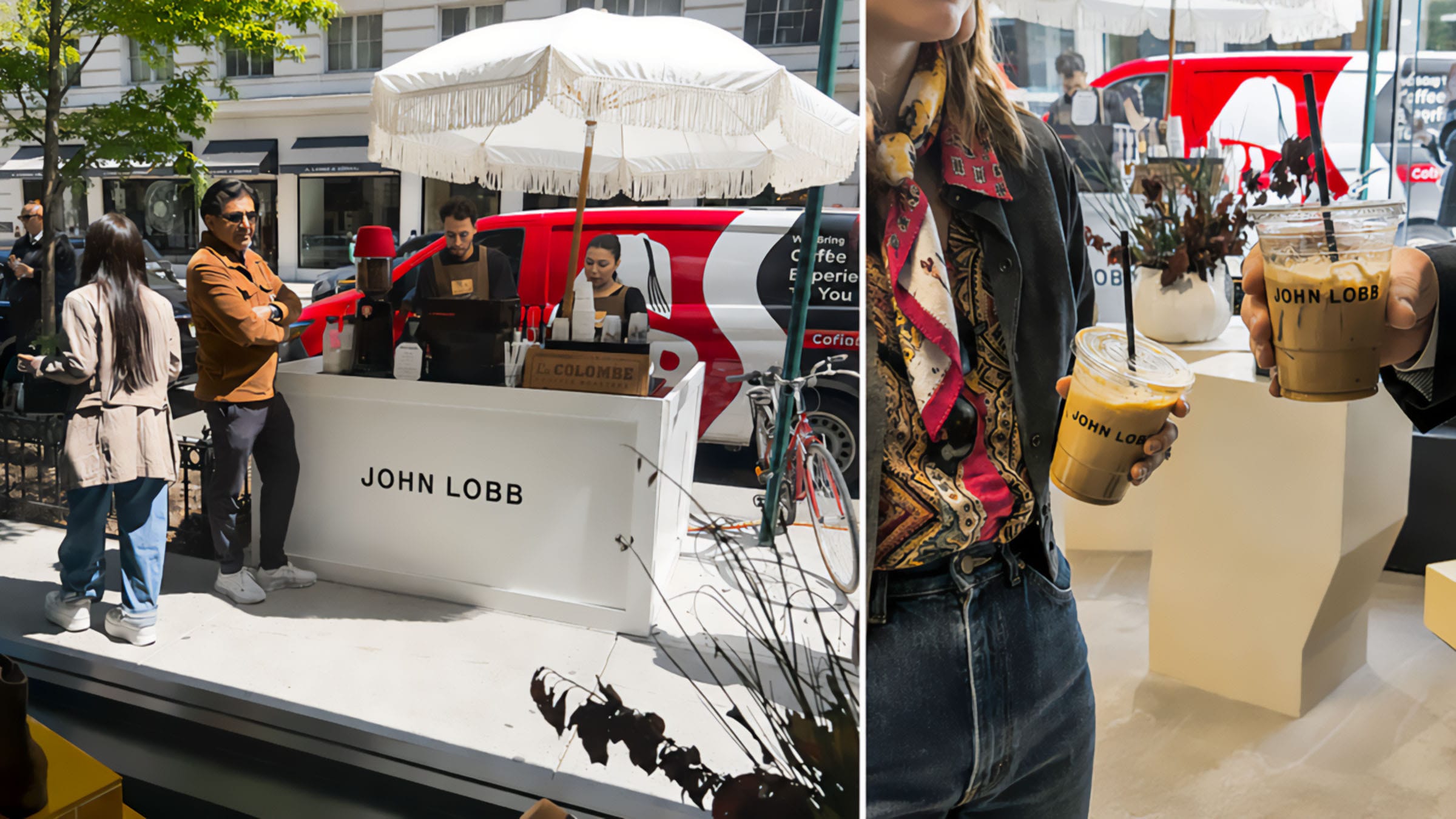
In a fashion or luxury retail setting, coffee enters a room already organized around something else.
Merchandise needs to remain visible while clients move between displays, fitting areas, consultations, and conversations with sales associates. Some guests may stay for an hour; others may stop in briefly.
Planning therefore has to account for station placement, menu complexity, backup supplies, and the behind-the-scenes work needed to keep service consistent throughout the day.
Plan Around How Guests Use the Space
Total attendance is only one part of the planning.
For fashion and luxury retail settings, it helps to understand:
- whether guests arrive through appointments or more gradually
- how long they are likely to stay
- whether they will remain with sales associates
- how many people may be in the space at once
- whether coffee needs to remain available continuously
- what other activity will be happening near the station
Dwell time changes the service pattern.
A client spending an hour browsing, trying products, or meeting with an associate may order differently from someone making a brief visit. Longer stays also affect clearing, replenishment, and how often the station needs to reset.
Concurrent attendance and guest behavior can therefore be more useful planning inputs than the total number invited.
The Coffee Cart Should Fit the Selling Floor
A compact cart can still be in the wrong place.
Retail placement needs to account for more than whether the equipment physically fits.
Depending on the setting, the station may need to work around:
- merchandise displays
- fitting areas
- consultation tables
- mirrors and product-testing stations
- client seating
- entrances and exits
- checkout areas
- electrical access
Coffee should fit the circulation pattern the room already uses.
If guests have to cross an active selling area whenever they order, the station can begin pulling attention away from the client experience. A queue in front of a display, fitting area, or consultation table creates the same problem.
The useful question is:
Where can coffee remain easy to access without interfering with merchandise or client activity?
A location that works in a street-level boutique may not work in a larger luxury store or private retail environment.
Match the Presentation to the Retail Environment
Fashion and luxury retail spaces often already have a strong visual identity.
Sometimes a clean cart, restrained signage, and carefully presented drinkware are enough. Other events may benefit from a more visible treatment.
Coffee Malem’s documented retail work includes both approaches, from themed cart treatments and coordinated drinkware to understated presentations designed to sit within the surrounding environment.
The role of the coffee should guide the treatment.
For client-focused hospitality, the service may need to remain secondary to the merchandise and conversations around it. If coffee is intended to become part of a campaign or product story, the project begins to involve a different set of creative and production decisions.
Those are covered separately in Coffee Catering for Brand Activations and Product Launches in New York City.
For a retail setting, the more immediate question is:
How visible should the coffee service be relative to the rest of the room?
Build the Menu for the Service Window
Menu choices affect more than what guests can order. They also determine how easily the bar can remain organized and consistent through the day.
A concise menu is easier to maintain during a long service window and simpler for guests to navigate. More distinctive drinks can still make sense when they contribute something meaningful to the event.
Before adding complexity, consider:
- how long the drink takes to prepare
- what additional ingredients or working space it requires
- whether it remains practical throughout the full service period
- whether the added preparation contributes enough to the guest experience
A drink suited to a small appointment may be less practical when several groups arrive close together.
Coffee Malem can develop custom menus and event-specific drinks when they fit the event size, season, service window, and production requirements.
The menu should give guests enough choice without making the station harder to run than it needs to be.
Think About the Station Six Hours Into the Day
A coffee station is easiest to judge immediately after setup. The harder test is how it looks six hours later.
Cups, milk, ice, ingredients, packaging, cleaning materials, waste, and backup stock all have to move through the operation while the retail environment remains active.
Before service begins, establish:
- where backup stock will be stored
- how supplies will reach the station
- where used cups and waste will go
- where cleaning can take place
- how the visible counter will remain clear
- whether cases, boxes, or working equipment could become visible from the selling floor
Used cups left beside merchandise or on consultation tables quickly become part of the room. So do open cartons, discarded packaging, and a cluttered work area.
The replenishment route matters for the same reason.
If restocking means repeatedly carrying cups, milk, or ice across the selling floor, that movement becomes visible to clients. A station slightly farther from the main entrance may work better if it has cleaner access to a stockroom or back-of-house area.
Quieter periods during a long service window also give the team time to clear, restock, clean, and reset before the next group arrives.
The service should look deliberate later in the day, not only when the doors open.
Service Style Should Match the Room
Barista interaction should reflect what guests are doing.
Someone browsing may welcome a conversation about a drink. A client speaking with a sales associate may simply need service without interrupting the exchange.
Attire, demeanor, and level of interaction should also make sense for the setting.
Some events benefit from energetic guest engagement. Others call for quieter service that remains available without becoming another focal point.
Work Backward From When the Floor Must Be Ready
Retail events often have a clear guest-ready deadline.
If the first appointment begins at 9:00 a.m., the station needs to be installed, stocked, tested, cleaned, and visually finished before the space becomes active.
Useful questions include:
- When will merchandising be complete?
- When can vendors enter?
- When does the selling floor need to be clear?
- Can equipment move through the store during setup?
- Is back-of-house access available?
- Where can cases and supplies be kept?
- Will visual merchandising, florals, production, or photography teams be working at the same time?
- When must visible setup materials be removed?
These details determine how coffee setup fits into the preparation of the retail environment.
Clients should encounter the finished service, not the equipment cases and setup work that came before it.
What to Confirm Before Booking
Before deciding on the service approach, establish:
- Guest pattern: Will people arrive gradually, through appointments, or during a defined event period?
- Concurrent attendance: How many people are likely to be present at the busiest point?
- Service window: Is coffee needed for a short event or across much of the day?
- Floor relationship: Where can the station sit without interfering with merchandise, consultations, fitting areas, or circulation?
- Back-of-house support: Where will stock, waste, and cleaning materials go?
- Replenishment: Can supplies reach the station without disrupting clients?
- Presentation: Should coffee remain understated or play a more visible role?
- Guest-ready deadline: When must the coffee station and surrounding floor be completely finished?
Those details usually reveal more about the right setup than guest count alone.
Coffee Malem for Fashion and Luxury Retail Events in New York City
Coffee Malem has substantial experience serving events in New York City, including luxury retail and brand activations. Its broader event history also includes fashion work, influencer events, outdoor retail pop-ups, and multi-day engagements.
For fashion and luxury retail environments, planning starts with the room: how clients will use it, where merchandise needs to remain visible, how long guests may stay, where supplies can be kept, and how the coffee service should fit around the activity already taking place.
Sometimes coffee should be noticed. In other settings, the better result is a service that works naturally within the space.
Planning coffee service for a fashion or luxury retail event in New York City? Tell us about the space, schedule, guest pattern, and service window, and we can talk through the setup.